
Matthew Mercer Reflects on Overwatch's Cassidy Name Change Years Later
Few decisions in the gaming industry have sparked as much conversation as Blizzard Entertainment's move to rename one of its most iconic heroes. The gunslinging cowboy originally known as McCree was quietly transformed into Cole Cassidy in October 2021, a change rooted in the broader reckoning over workplace culture at Activision Blizzard. Now, five years on, voice actor Matthew Mercer's insights into that pivotal moment continue to resonate with the Overwatch community.
Mercer, who has voiced the character since the game's launch in 2016, first addressed the situation publicly in 2021 during an interview with ComingSoon.net. His words captured the delicate balance between fan attachment and the need for accountability. "I know this is a small consolation, but it’s one that needed to be done for a lot of people to feel comfortable moving forward with the story of Overwatch and the characters," Mercer said at the time. What makes his commentary particularly striking today is how it acknowledged the complexity of fan reactions without dismissing the underlying pain. "People have different opinions on it and some can say that it’s just a name and that it is ridiculous to change it, but it’s a name that also represents a connection to a lot of people’s pain and abuse. And if we have the opportunity to make it better and let that lie in the past and let the character live as something separate like it should, then I can’t help but be behind that."
The catalyst for the rebrand was the departure of Jesse McCree, the former lead designer on Diablo 4, from Blizzard. His involvement in the so-called "Cosby Suite" — a hotel room named after Bill Cosby, who has been accused of sexual assault by numerous women — became a symbol of the toxic environment described in multiple lawsuits and investigative reports. The name shared between the developer and the Overwatch hero forced the company to reconsider its tradition of immortalizing employees in its games. Blizzard subsequently declared it would no longer name characters after staff members, a policy shift that fundamentally altered its approach to character creation.
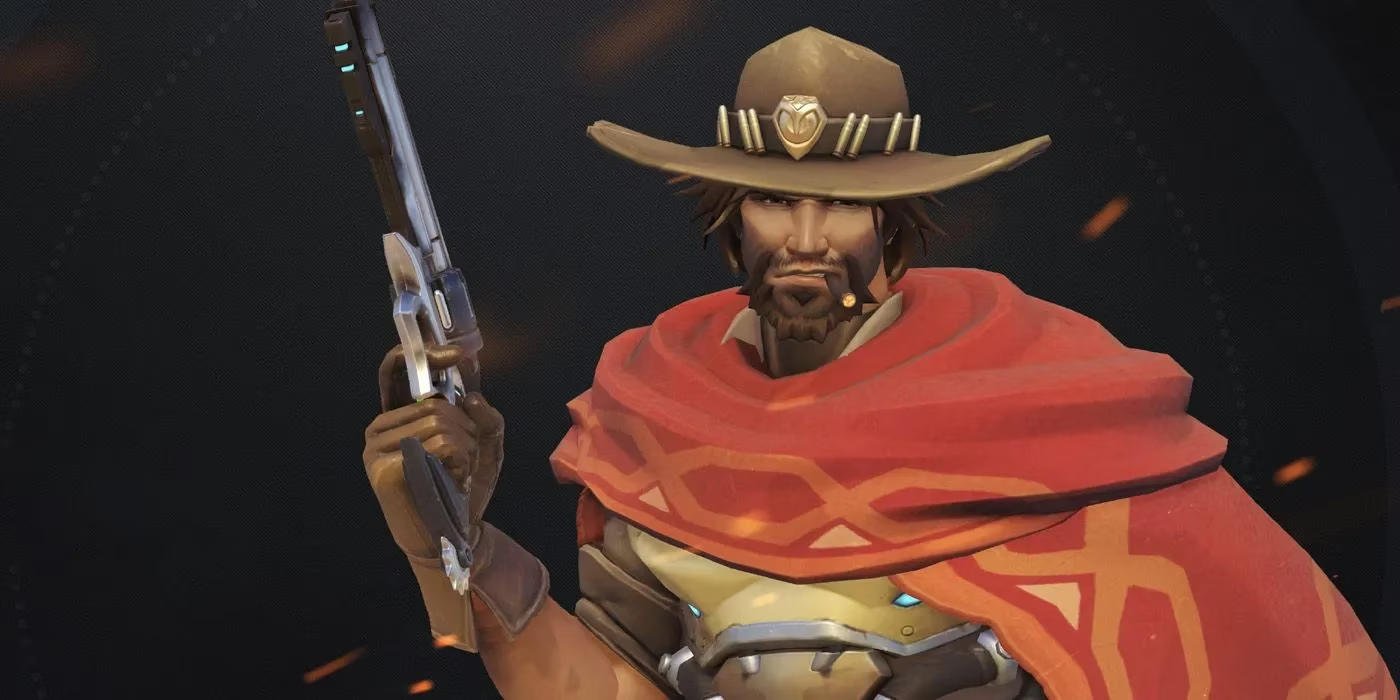
In the years since the name change, Cole Cassidy has settled into his new identity. The transition was handled through an in-game narrative that framed "McCree" as an alias the character left behind, tying the update into Overwatch's evolving lore. This storytelling choice helped smooth over what could have been a jarring break for longtime players. Mercer’s consistent professionalism and sensitivity throughout the process also played a key role in maintaining the character's fanbase. Behind the scenes, Blizzard made a point of directly consulting the voice actor before announcing the change. Mercer recalled, "They called me and asked if I was aware of the situation and I said, ‘I very much am.’ And they said, ‘As a part of this process, we want to separate this character from the terrible circumstance and give the opportunity to make this right and it’s just one small way amongst many that need to be done. We just wanted to call and let you know and make sure you were OK with that.’"
That level of communication reflected a broader, if uneven, attempt by the studio to rebuild trust during a period of intense scrutiny. Activision Blizzard faced multiple lawsuits, employee walkouts, and widespread criticism over allegations of harassment and discrimination. The character rename was never presented as a solution but rather as one of many necessary steps. Mercer himself emphasized this point, calling the gesture "small" but meaningful.
Looking at the landscape of live-service games in 2026, Overwatch's name change stands as a precedent for how developers can navigate the intersection of real-world controversy and fictional worlds. Other studios have since grappled with similar dilemmas, from removing problematic references to overhauling character designs tied to disgraced individuals. The industry has largely moved toward a model where in-game content is not inextricably linked to any single creator’s legacy, a shift that Blizzard’s no-naming policy helped accelerate.
For the voice acting community, Mercer’s handling of the situation became a case study in empathetic communication. Rather than distancing himself, he acknowledged the pain that the original name evoked while reaffirming his commitment to the character and the fanbase. His words from 2021 remain a touchstone for discussions about accountability in gaming: acknowledging discomfort without dismissing it, and embracing change as a path forward rather than a loss.
The Overwatch roster has expanded significantly since 2021, but Cole Cassidy endures as a fan favorite. His crisp revolver shots and rugged persona remain instantly recognizable, and the character’s narrative has only deepened with time. The ordeal that prompted the rename recedes further into the rearview mirror, yet the principles Mercer stood for — empathy, listening, and the courage to make things right — continue to echo through every "It’s high noon" and every pixel of the game’s vibrant world.
As Overwatch moves deeper into its second decade, the Cassidy rename serves as more than a trivia footnote. It’s a reminder that even in fantastical settings, the names and symbols we choose carry weight. And when those weights become too heavy, a voice like Mercer’s can make all the difference — steady, compassionate, and unafraid to say, "it needed to be done."
Comments